1SPATIAL

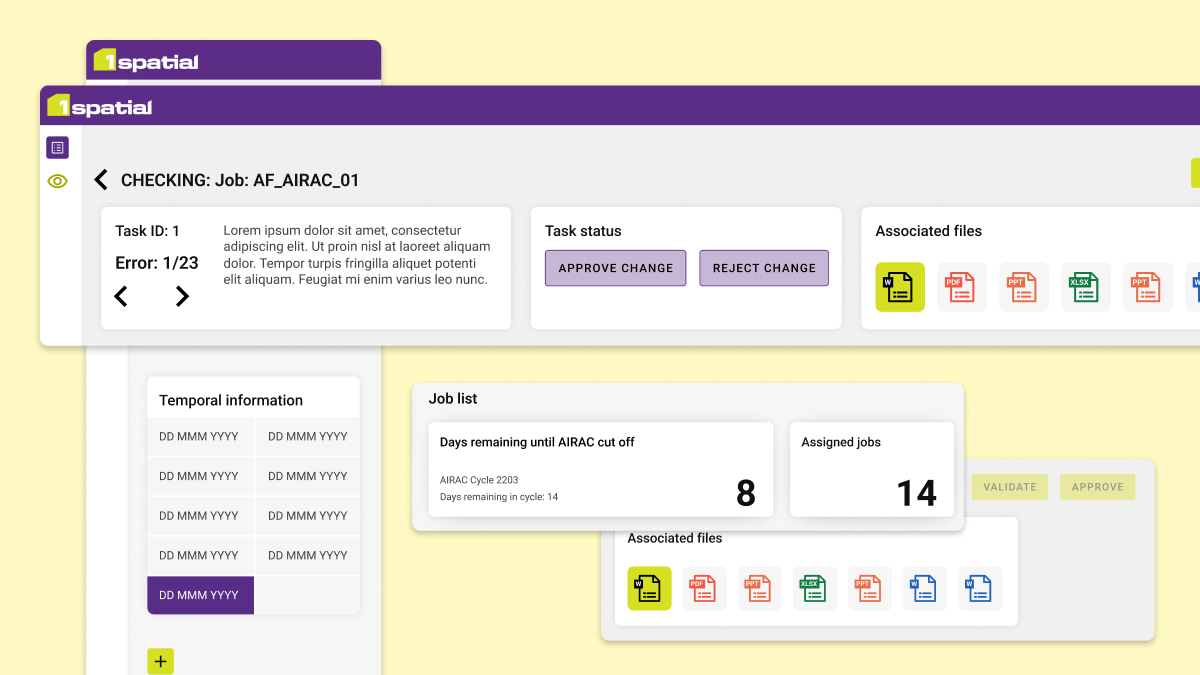
Working collaboratively with 1spatial as the research and design partner, to redesign an application that manages aeronautical information for the Royal Air Force (RAF).
2022   •   3 Month Project  •   Internal SAAS Web Platform  •   Product Design
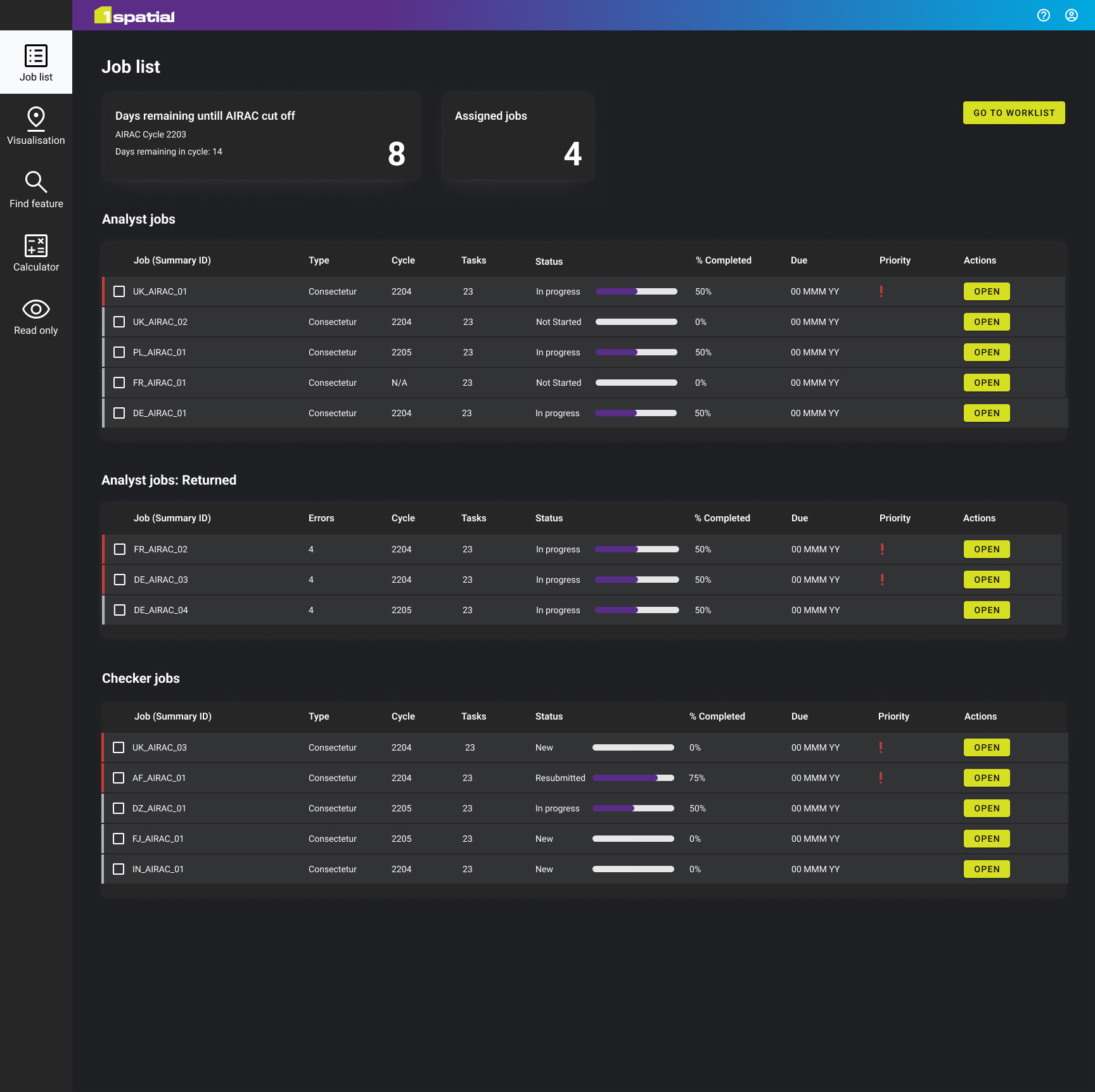
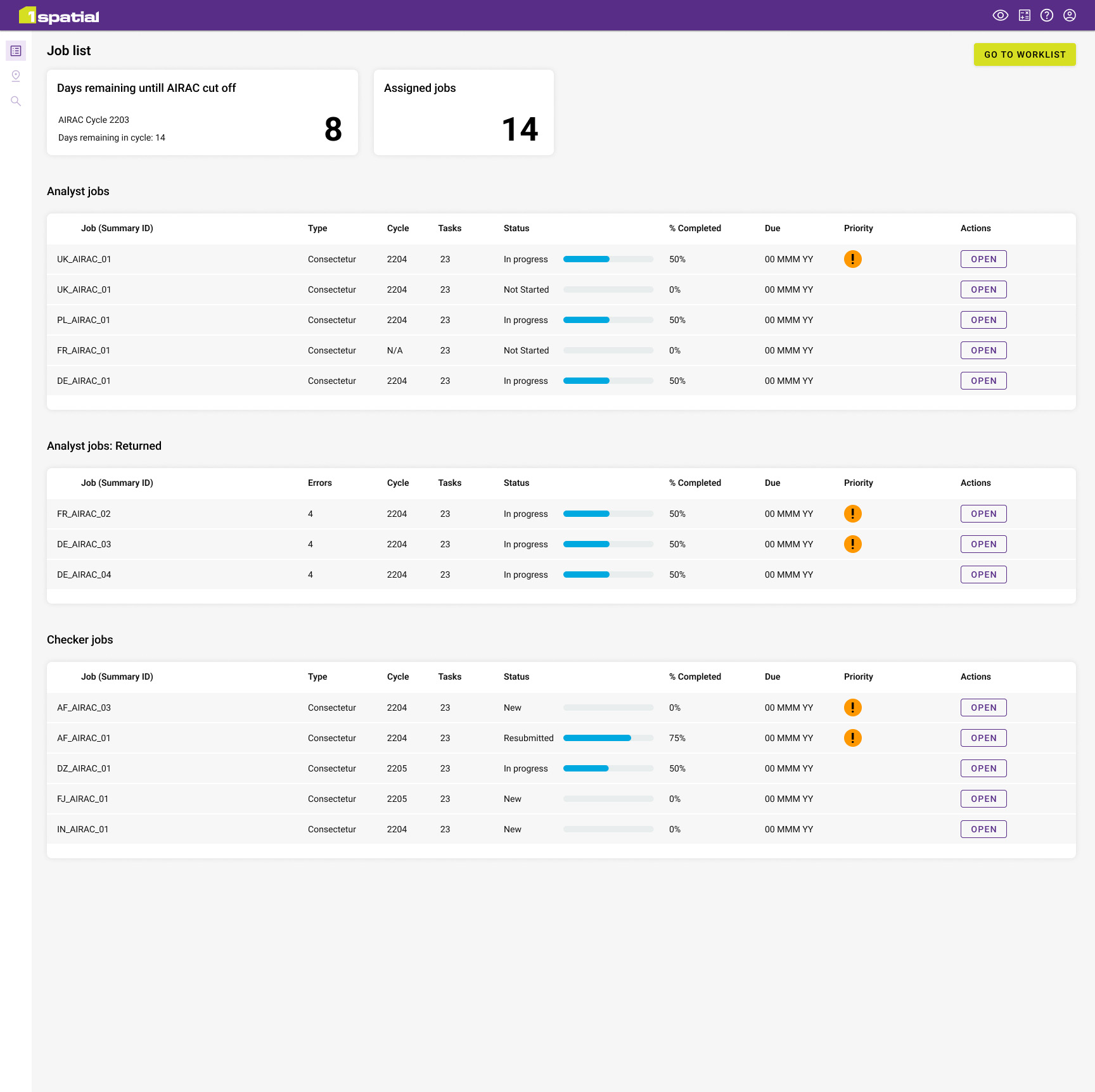
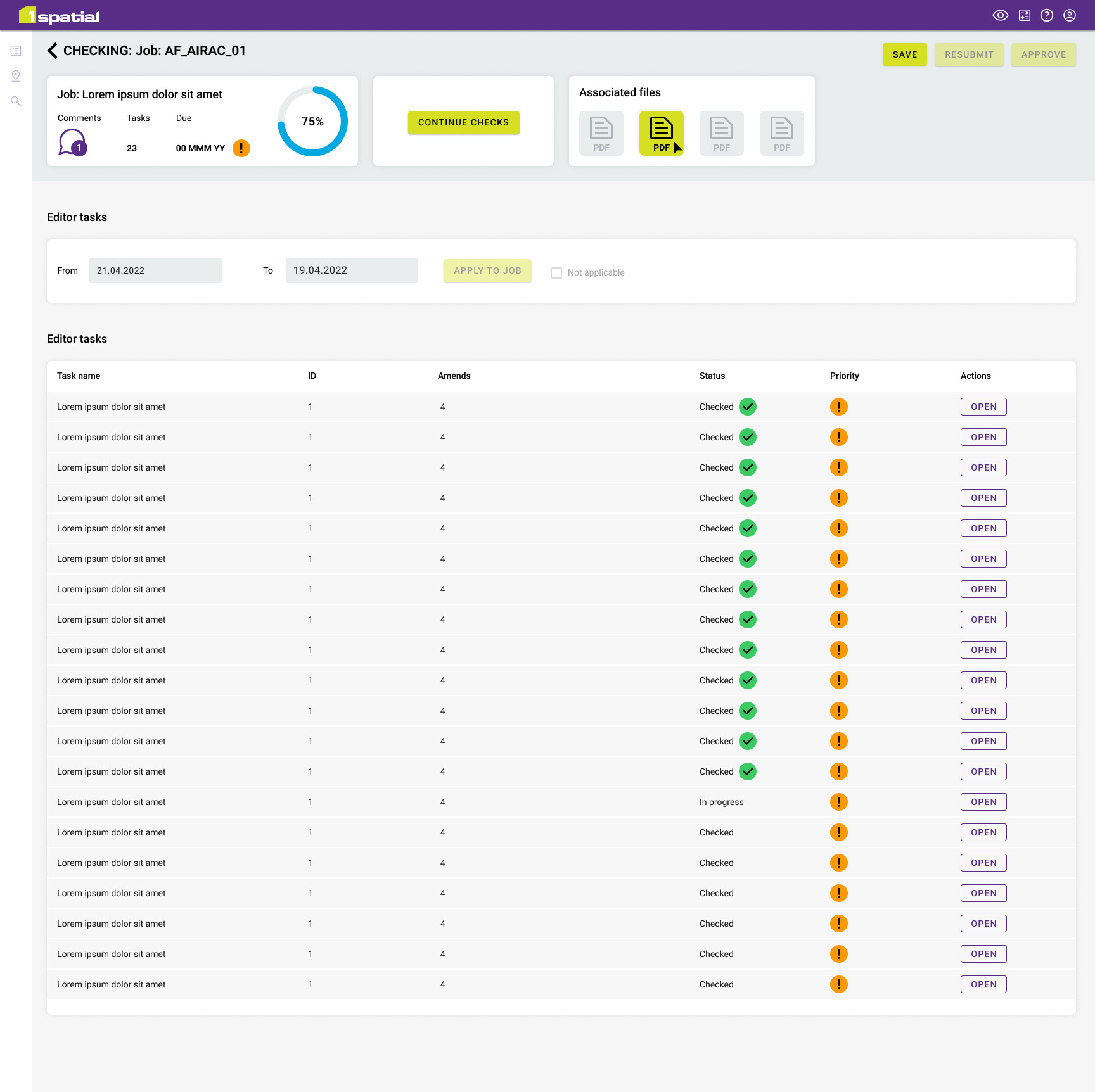
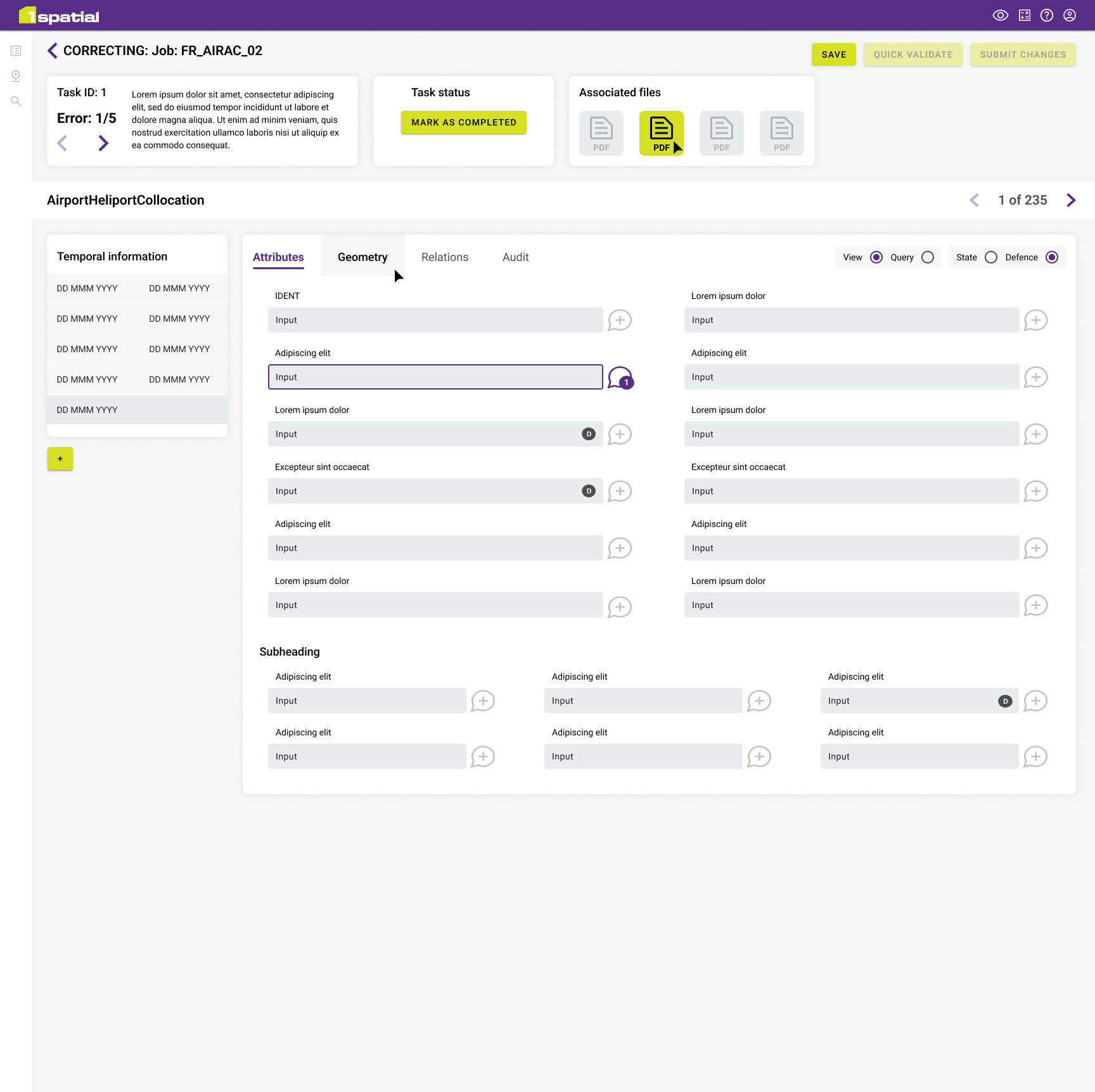
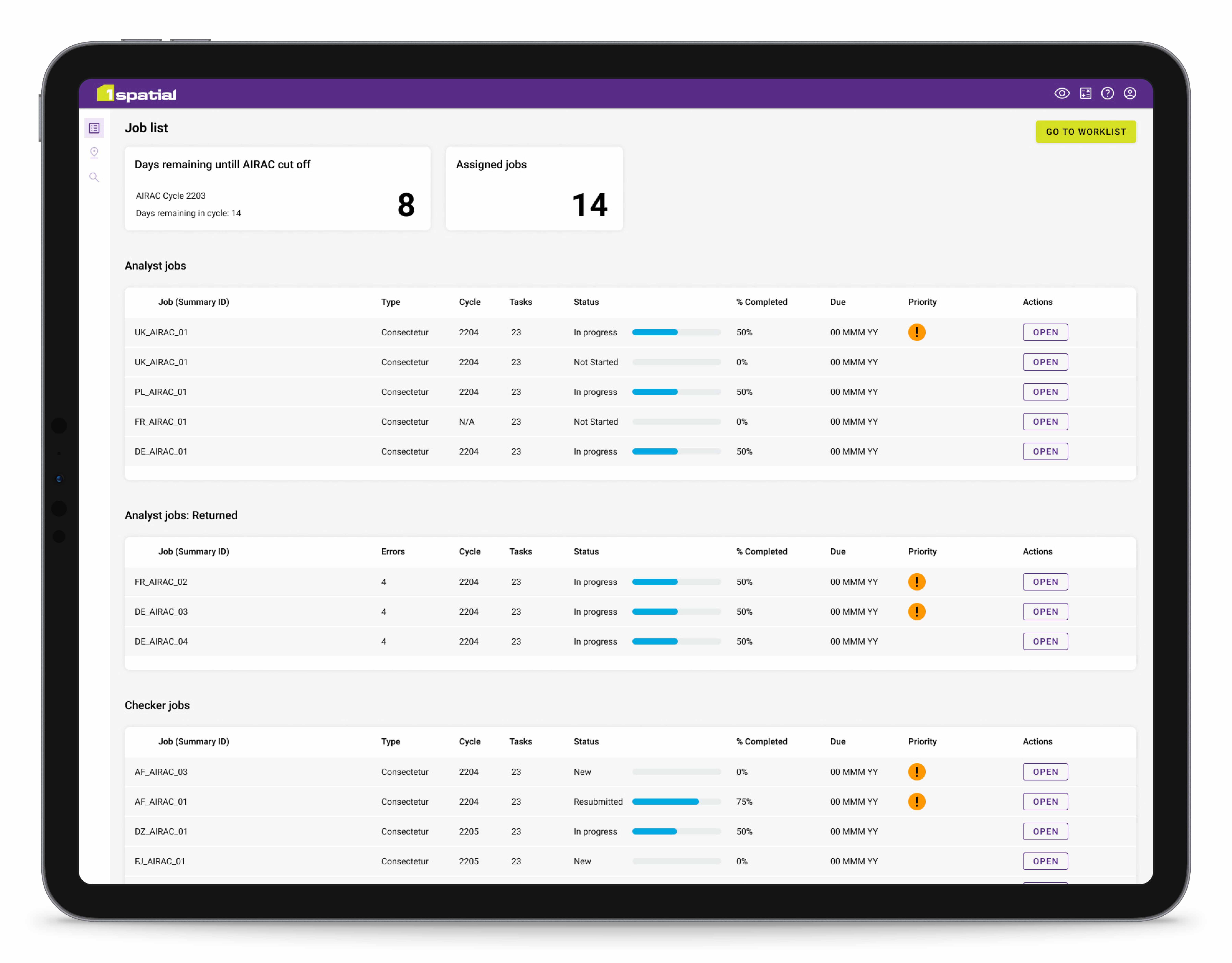
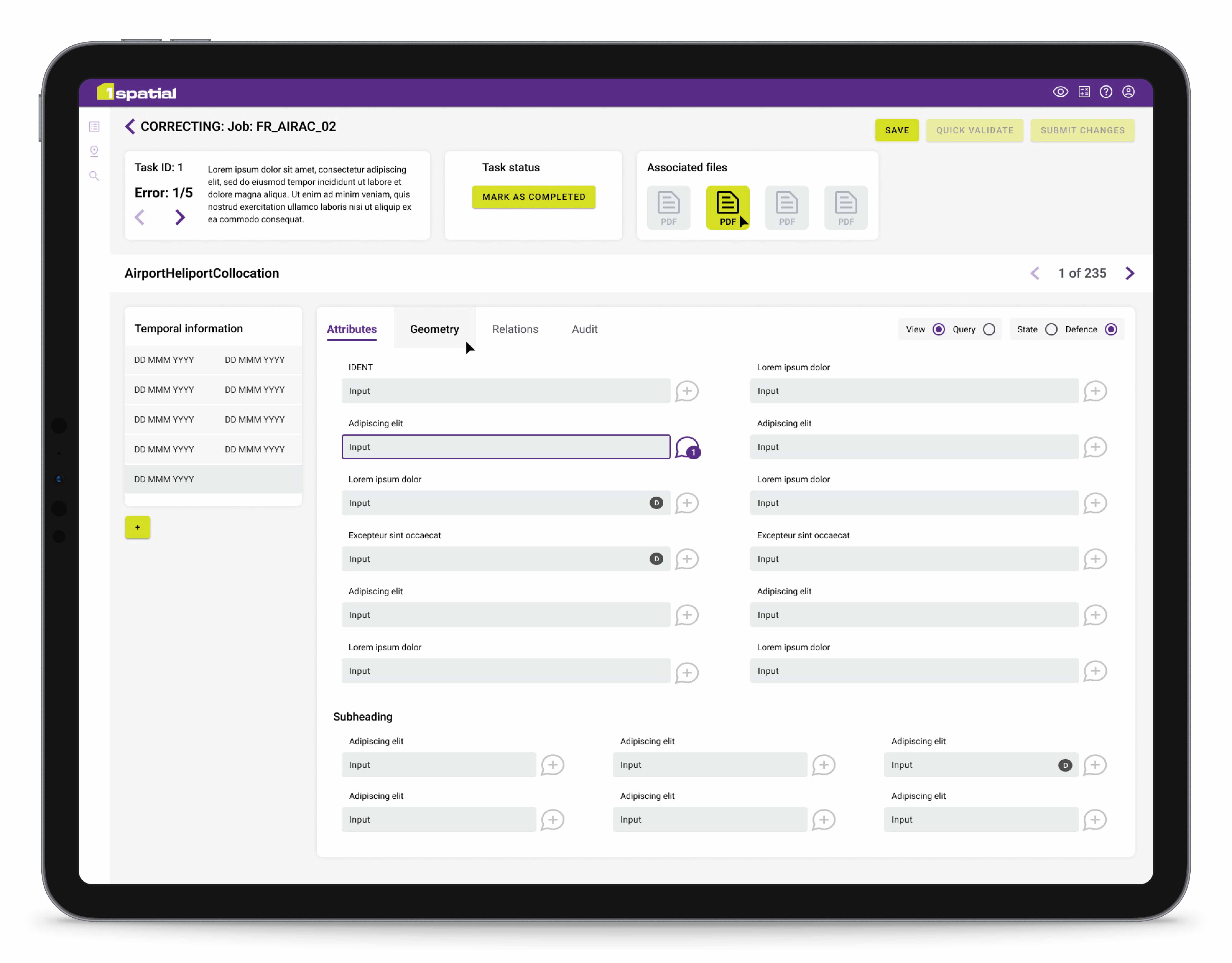
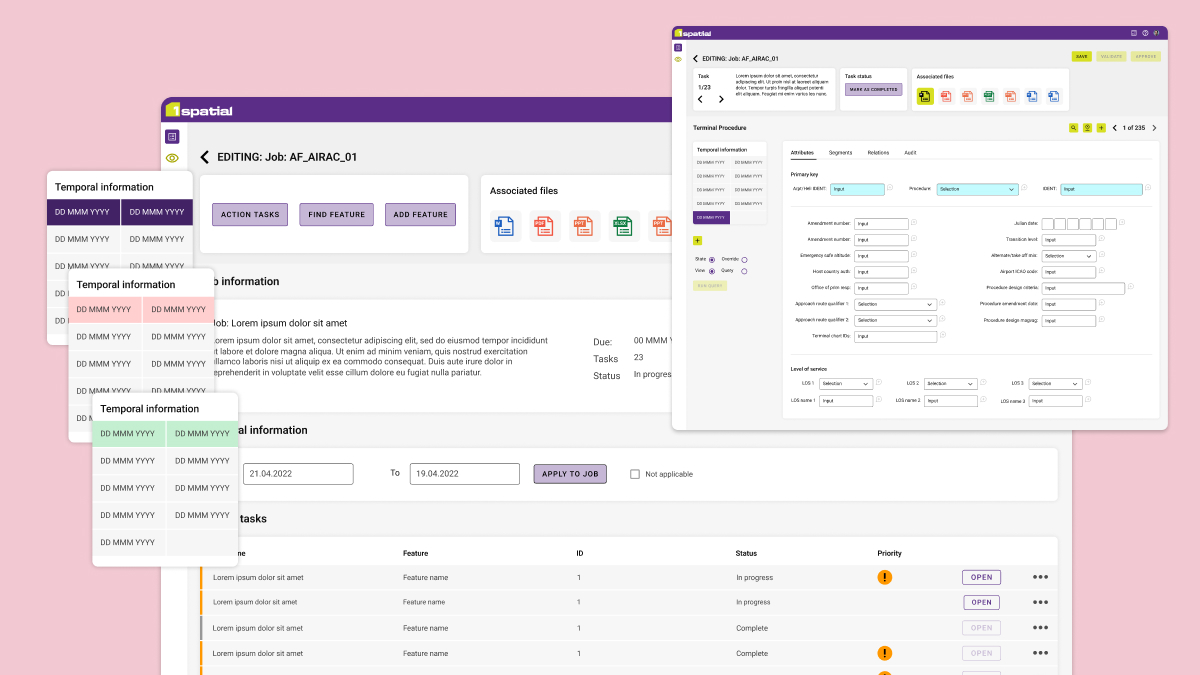
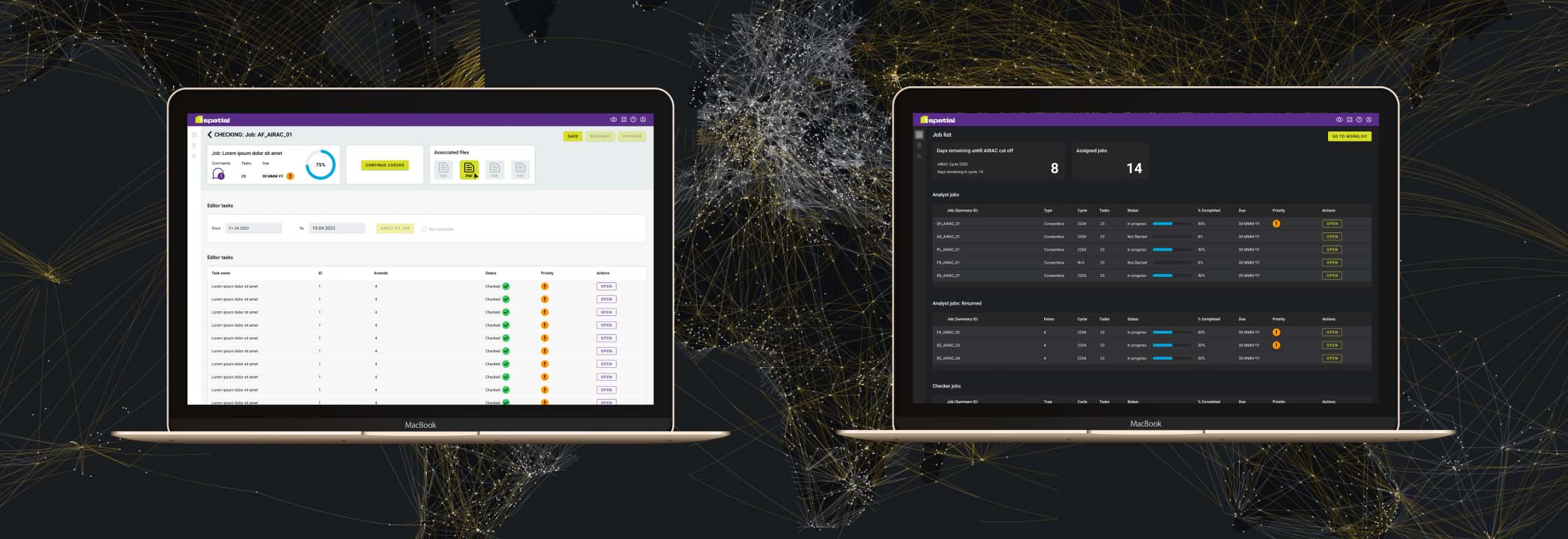
Final project outcome.
Introduction
1spatial is a leading geospatial data management and master data management provider. The project was to help deliver a project for the Ministry of Defence (MoD), supporting 1spatial as their UX/UI research and design partner. The project was to redesign an application that manages aeronautical information for the Royal Air Force (RAF).
The Challenge
The current application was originally developed by 1spatial some 25 years ago. New versions of the application were periodically released to offer additional functionality within the parameters of the original interface design and information architecture. With the passage of time, the need arose to have a fresh look at the objectives of the application, its technology and visualisation of the application’s information so that users would be able to use the application as efficiently as possible
The Objective
The objective was to design a modern interface in line with UX/UI best practices and to deliver design system foundations to inform future design and development of the application. The success metrics for this project included performance improvements (50% speed increase), compliance with ISO 9241-210: Human-centred design for interactive systems, and compliance with WCAG (minimum AA 2.1) accessibility standards.
Project Definition
Roles & Responsibilities
I was involved in the project from conception through to completion. I supported the Senior UX Researcher for the first half of the project who led the workshop, interviews and persona work. I then led the project from the information architecture stage through to wireframing and UI development, with the Senior UX Researcher providing support.
User Observations/Interviews
Objectives:
  • Understand and validate the editor and authoriser workflows
  • Identify and validate their behaviours, needs and pain points
  • Explore and uncover wants and needs for the new editor
  • Resolve outstanding questions surrounding roles, use and requirements
Recommendations:
  • Standardise the way input and checking are represented
  • Setting rules around tooltips
  • Consider how to incorporate visual checks
  • Implement improved window structure (to support multiple windows)
  • Create a design system that negates user error
  • Save as often a possible
  • Apply the same level of user research to other areas
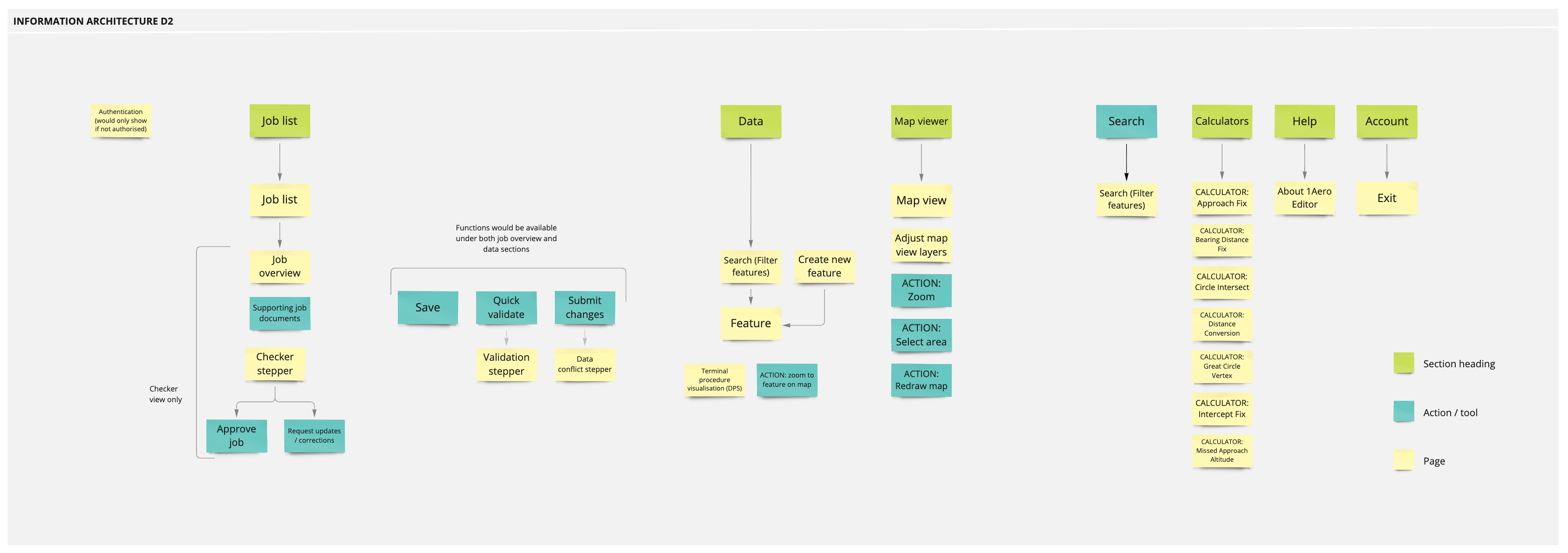
Information Architecture
Mid Fidelity Wireframes
Usability testing
Objectives
Overarching Themes
Recommendations
User Interface Concept 1
Click images to enlarge
User Interface Concept 2
Click images to enlarge
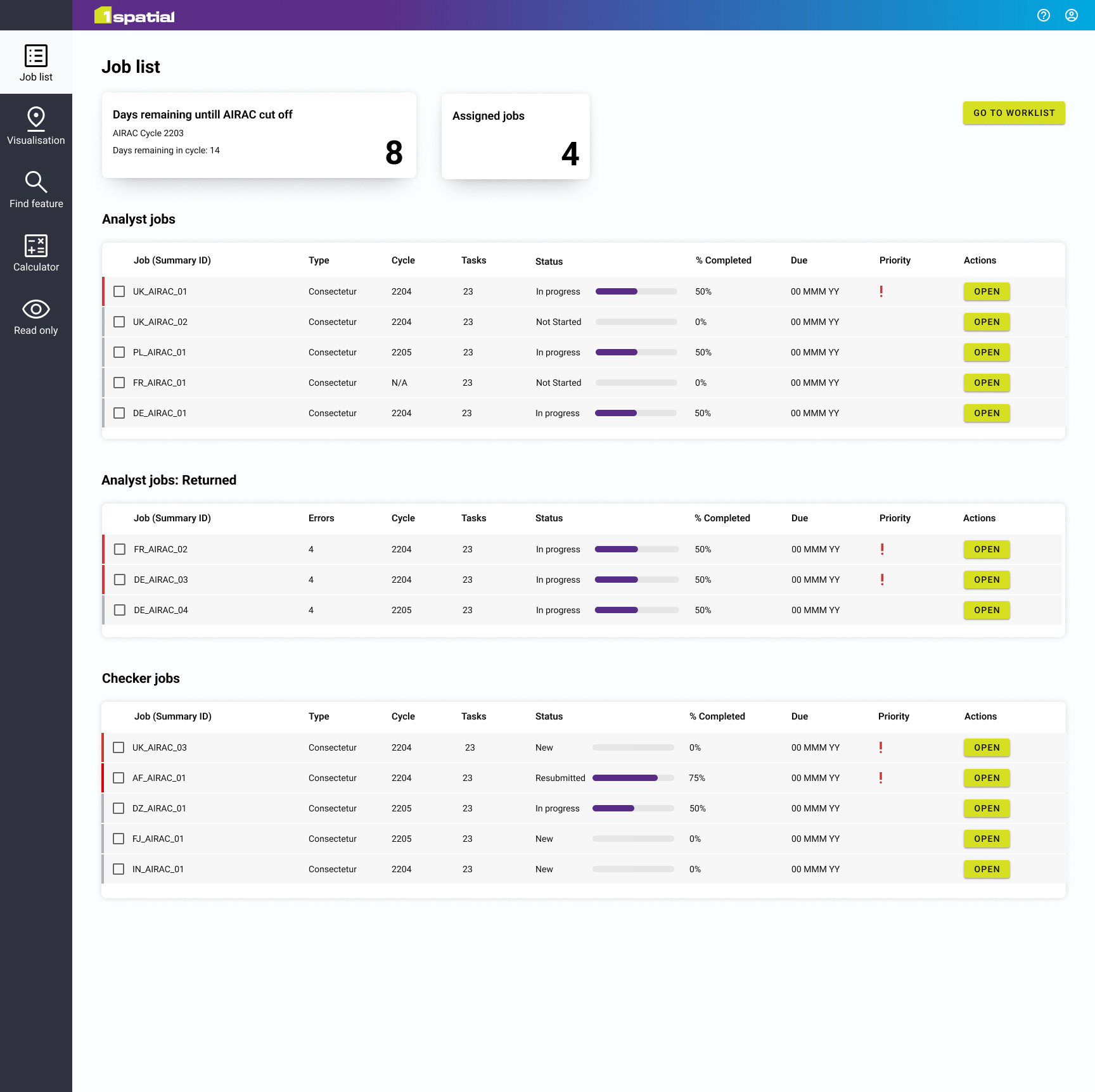
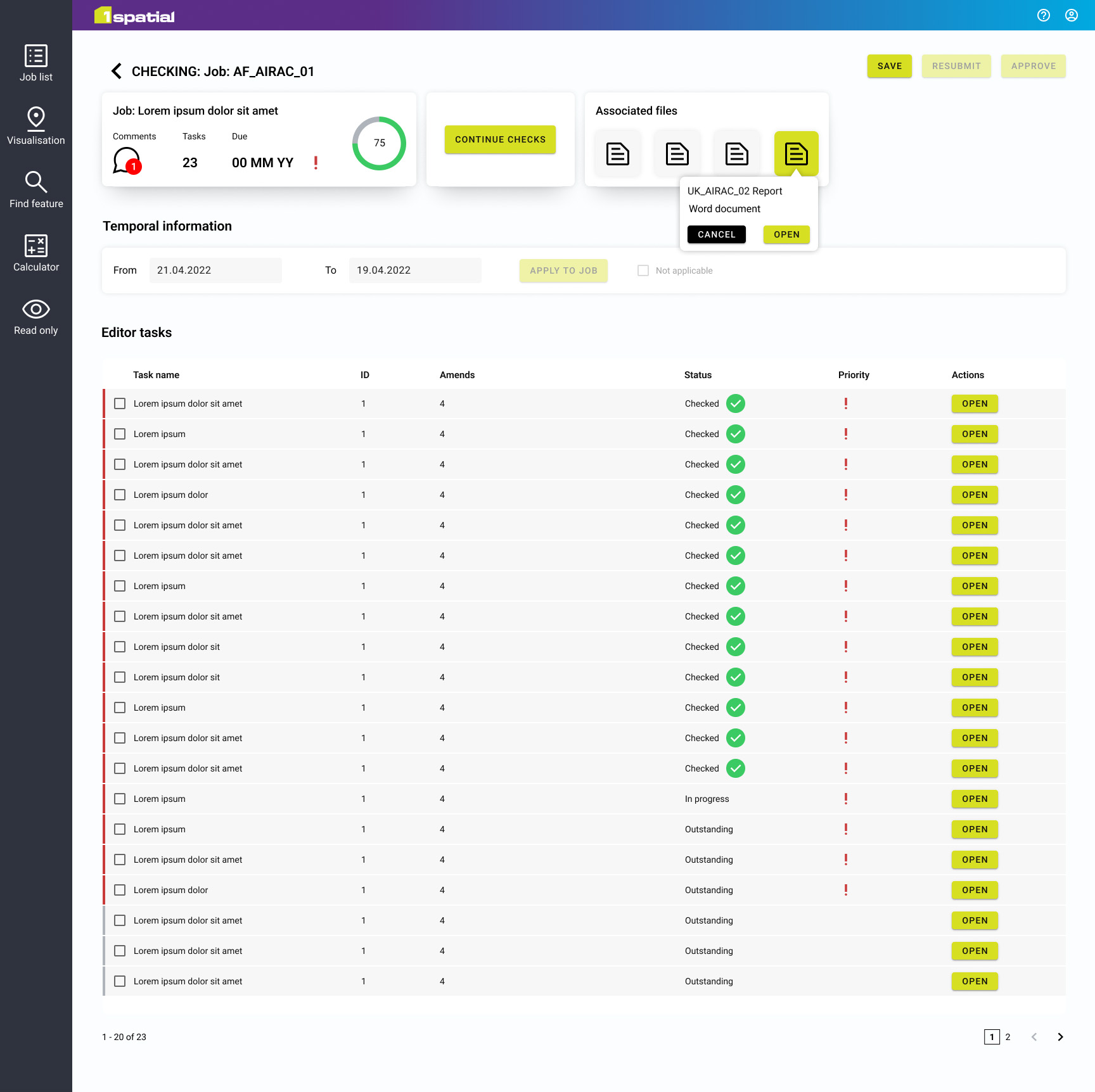
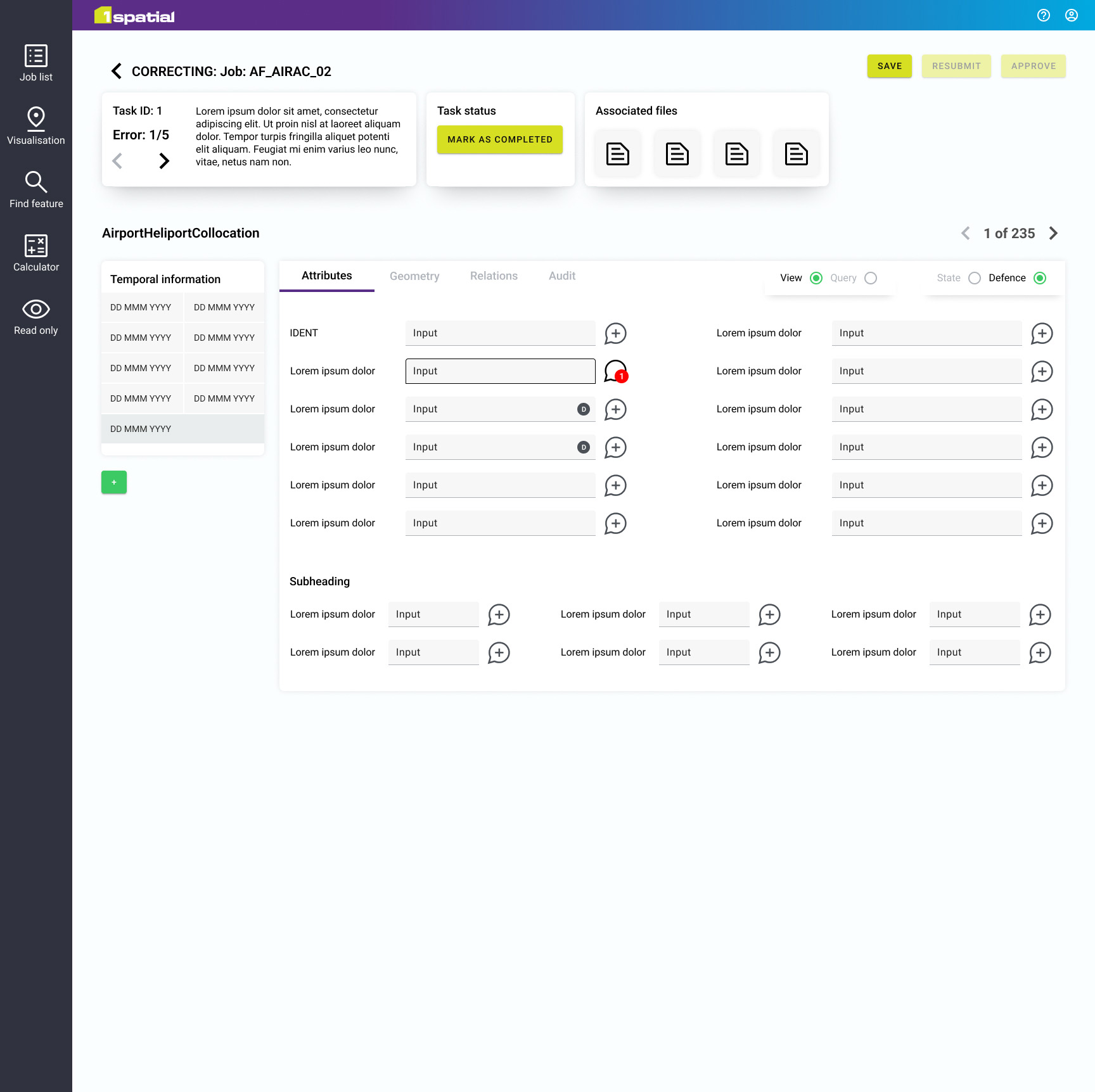
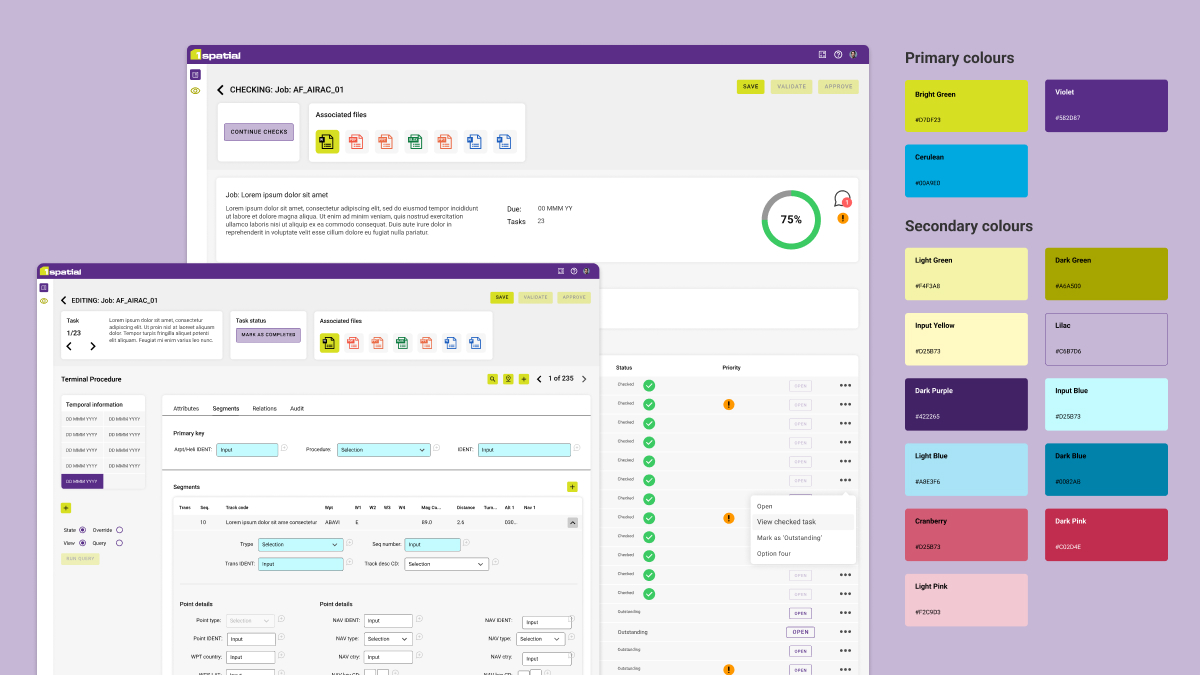
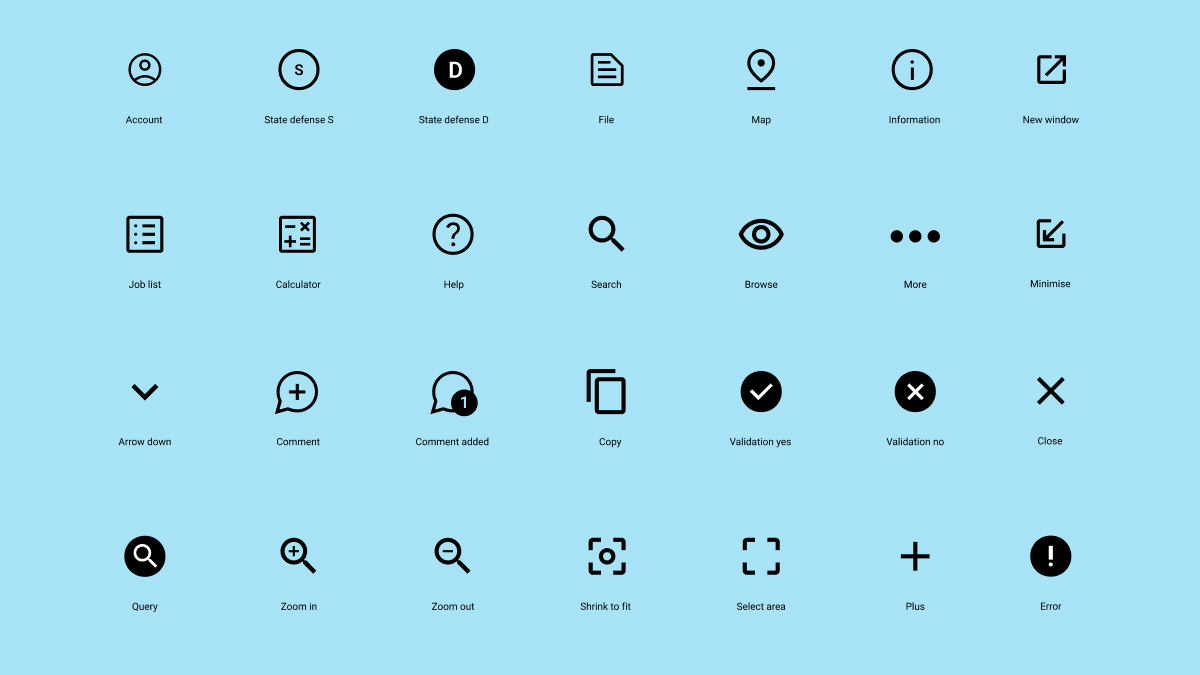
Two UI concepts were then proposed to the client to review which reflected 1spatial’s brand identify. A style guide was created housing key design principles and elements such as colour, typography etc. 
Legibility, clarity and ease of use were prioritised in the UI designs. This ensured that nothing extraneous was designed which distracted from the objectives and functionality of the application, and would have more longevity from a visual perspective.
Chosen Concept & Final Design
Portfolio Assets
Business Impact/Results
"The team helped us achieve a better understanding of the users and the context of use for the new system. A user-centred approach added meaning to a set of original vague requirements and provided the basis to be able to design, in detail, the application. This gave the customer substantial confidence that they were getting what they wanted and needed.”
Terry Child, Product Manager at 1Spatial.